I had been talking about minimalism for years without actually doing it. The 200 articles I had read on the subject were nice. The pile of stuff in my apartment was bigger than ever.
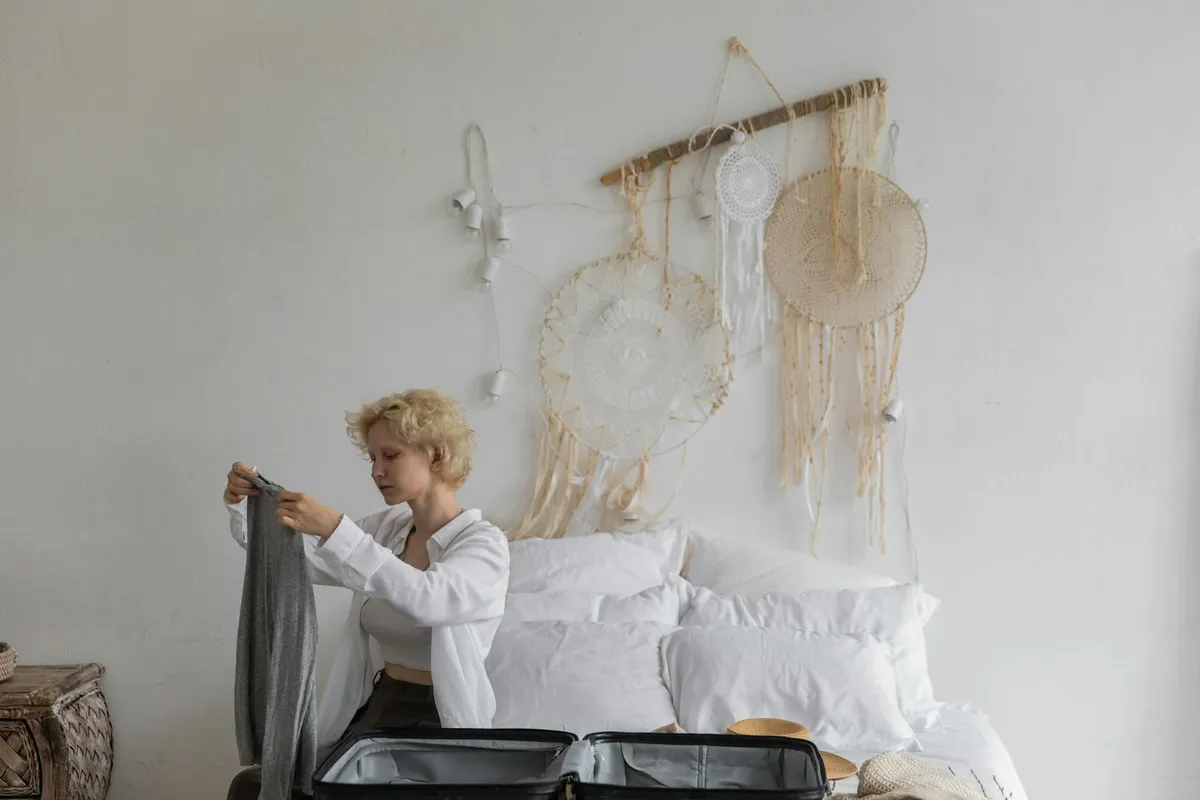
For 6 months I committed to living with only what I could fit in one suitcase. Traveled between countries during this period (slow travel, multiple cities). Tracked what I missed and what I did not. Here is the honest report.
The setup
Rules:
- Everything I owned for 6 months had to fit in one rolling suitcase
- Plus a small backpack for laptop and immediate essentials
- Stored everything else in a friend's basement
- Could not buy "stuff" beyond consumables (food, toiletries, occasional travel necessities)
- Tracked: what I packed, what I actually used, what I missed, what I bought
What I packed
Final packing list:
Clothing:
- 4 t-shirts
- 2 long-sleeve shirts
- 1 button-down shirt
- 2 sweaters
- 1 light jacket
- 1 pair jeans
- 1 pair black trousers
- 1 pair shorts
- 1 pair leggings
- 1 pair pajamas
- 7 pairs of underwear
- 5 pairs of socks
- 1 pair of sneakers
- 1 pair of slip-on shoes
- 1 pair of sandals
- 2 swimsuits (was traveling to warm places)
Tech and tools:
- Laptop and charger
- Phone and charger
- Headphones
- Universal adapter
- Kindle
- Camera and one lens
Other:
- Toiletries (the obvious things)
- Important documents (passport, insurance, etc.)
- Small first aid kit
- Notebook and pens
- One book (paper)
Week 1: surprised by sufficiency
The first week, I kept feeling like I had forgotten something. The packing felt incomplete. I would think about something at home and realize "oh, that's in storage."
The realization, slowly: I did not actually need most of those things. The packing felt incomplete because I was used to having more, not because the packed amount was actually inadequate.
Weeks 2-4: the wardrobe rotation
The clothing rotation was tighter than I had ever lived with but completely workable. 4 t-shirts means each gets worn twice between washings. 2 sweaters cover all weather variation needs. The combinations produced enough variety that I never felt I was wearing the same outfit constantly.
The harder adjustment: not having choice. I would think "I want to wear that other top" and remember I did not have it. The not-having was uncomfortable initially. By week 3, I had stopped having those thoughts. The available options had become my available options.
Weeks 5-12: noticing what I did not miss
By the second month, I had a clear sense of what I had not missed at all from my old life:
- Most of my "occasion" clothes
- Most of my decorative objects
- Most of my books I owned but had read
- Most of my kitchen tools (had been using minimal apartment kitchens)
- Most of my "I might need this someday" gear
- Most of my paperwork and files
The list of what I genuinely missed was much shorter:
- One specific cookbook
- My desk setup (proper monitor, ergonomic chair)
- A few specific books I had wanted to re-read
- Certain art supplies for occasional creative work
- The familiar comfort of my own kitchen
Weeks 13-26: settled into the rhythm
The second half of the experiment was settled. The suitcase had become my baseline. Adding anything required a corresponding subtraction (could not exceed the case).
The discipline produced a particular relationship to stuff: every potential acquisition was evaluated against current possessions. The default was no rather than yes. The bias toward acquisition that I had not noticed before became visible by its absence.
What I bought during the 6 months
Things I actually purchased during the experiment:
- 1 sweater (replaced one that wore out)
- 1 pair of sandals (replaced ones that broke)
- 1 pair of sneakers (replaced ones that wore out)
- 3 t-shirts (replaced ones that wore out)
- Toiletries as consumables
- Books on Kindle (no physical accumulation)
- 2 small notebooks
Total dollar amount spent on "stuff" in 6 months: about $200.
Comparison: my normal stuff-buying rate (clothes, household items, books, gear) was probably $200 per month. So the experiment saved about $1,000 in 6 months purely from reduced acquisition.
What I learned about stuff
1. Most of what I owned was not adding value to my life. When forced to choose what to take, the genuinely valuable things were a small subset of total possessions.
2. Acquisition is mostly habit. The bias toward buying things turned out to be a habit rather than a need. Removing the option of buying things did not produce hardship.
3. Less stuff produces specific benefits. Less to maintain, less to organize, less to think about. The mental space released by not owning much was real and valuable.
4. The "minimalism aesthetic" is mostly marketing. Real minimalism is not about owning beautiful curated possessions. It is about not owning much at all. The two are different.
5. Specific possessions still matter. The few things I genuinely missed were specific. Identifying which things actually matter to you (versus generally accumulated stuff) is the useful exercise.
What happened when I returned
I came back to my stored possessions after 6 months. I got rid of about 70% of them.
The criterion: had I missed it during the 6 months? If yes, kept. If no, donated.
The 30% I kept is what I now own. My living space has substantially less stuff than it had before. The rooms feel different. The mental load of stuff feels different.
What I did not learn from this experiment
To be honest about the limits:
- This experiment worked because I was traveling and had no permanent space requirements
- Living with one suitcase in a permanent home is a different challenge
- People with families, hobbies that require gear, or specialized work need more
- The "should I own less" question is not the same as the "should I live with one suitcase" question
The experiment was illuminating about my relationship with stuff. It is not a model for everyone's life.
The honest difficulties
Things that were genuinely hard:
- Cold-weather places stretched my limited wardrobe to its limit
- Some social occasions made me feel underdressed
- Doing laundry frequently became necessary
- The "I want a comfortable familiar thing" feeling occasionally became strong
- Buying a souvenir or gift required immediately thinking about how to fit it in
This is not advice
Most people will not want to live with one suitcase. The experiment is not a prescription. It is a way to discover what you actually need versus what you accumulated.
You can do a smaller version: pack one suitcase as if you were leaving for 3 months, then live with only what is in the suitcase for 30 days while keeping the rest in storage. The reduced experiment will produce most of the same insights.
The takeaway
Most of us own substantially more than we use. The relationship between owning and using is much weaker than the marketing suggests.
If you have a vague sense that you own too much, run a version of this experiment. You will discover what you actually need. Most people are surprised by how little that turns out to be.
I now own maybe 25% of what I had a year ago. I am not less happy. I am probably slightly more so.